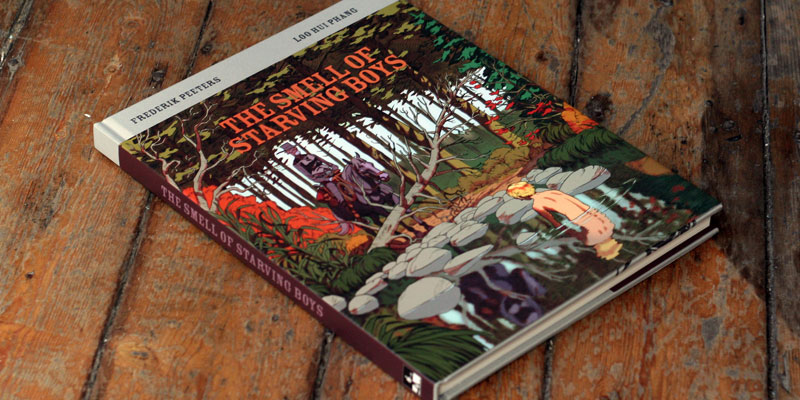
Over the last few years, comics artist Frederik Peeters has proved that he can turn his remarkable talent to any subject whatsoever, from autobiography (Blue Pills), through surrealism (Sandcastle, Pachyderme), to high science fiction (Aama). Now, in a collaboration with the writer Loo Hui Phang, he reinvents another genre: the Western.
Phang is an experienced comics writer whose own wide-ranging career has seen her produce plays, films, performances and installations, and collaborate with illustrators from Blexbolex to Ludovic Debeurme.
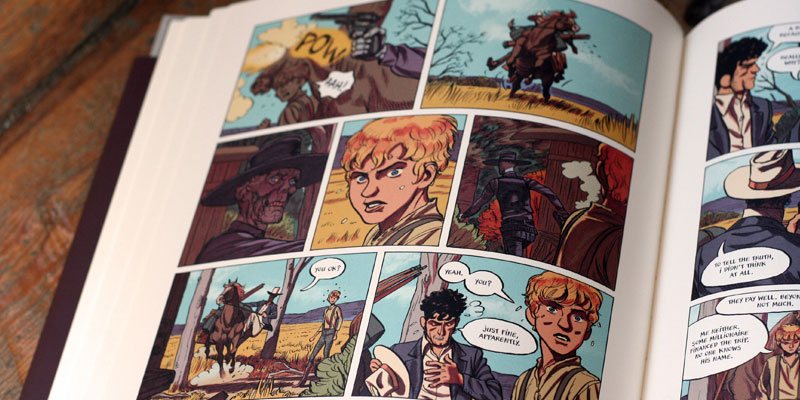
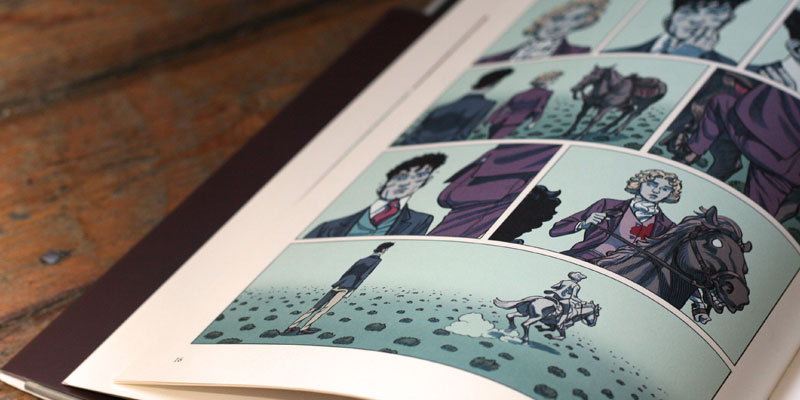
In The Smell of Starving Boys, Phang crafts an intense and philosophical Western that explores the clash between two worlds: one defined by rationality and technology, the other by shamanism and nature.
Set in post-Civil War America, the book follows an expedition led by the geologist Stingley, who is looking to capitalise on "unclaimed" land to the west of the Mississippi. As they enter the native Comanches' last bastion of resistance, the boundaries between the "civilised" and the natural worlds begin to blur, social conventions dissolve and an ambiguous relationship burgeons between Stingley's travelling companions, the photographer Oscar Forrest and the young assistant Milton.
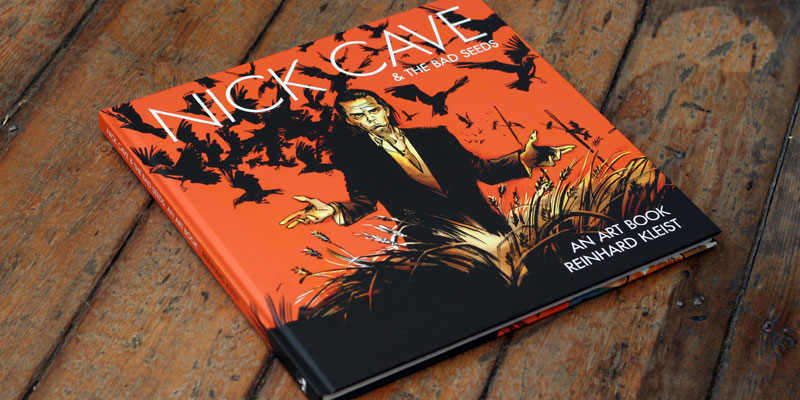
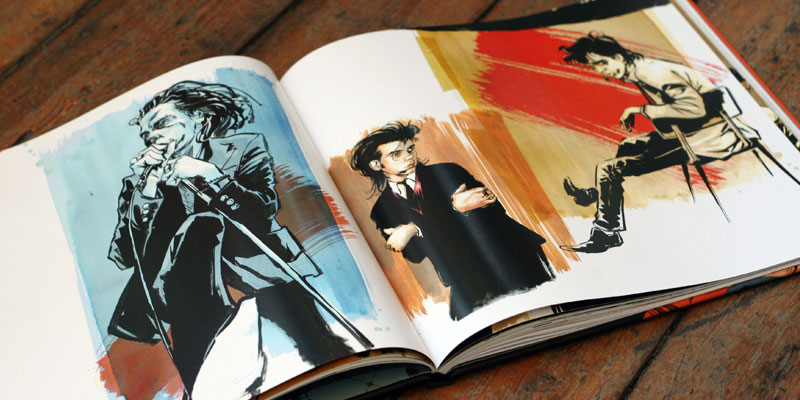
In his graphic biography Nick Cave: Mercy on Me, Reinhard Kleist paints an enthralling portrait of the musician, novelist, poet and actor. It is, according to Nick Cave himself, “a complex, chilling and completely bizarre journey into Cave World”. Now, available exclusively from nickcave.com, Nick Cave & The Bad Seeds: An Art Book brings together Kleist's moody and expressive portraits of the musician and his band, spanning thirty years of writing, recording and live performance.
Filled with visual delights, this LP-sized art book also returns readers to Nick Cave’s imaginative world with comic book reimaginings of “Deanna”, “The Good Son” and “Stagger Lee”.
So, if there's a Cave lover in your life, or if you just want to enhance the look of your coffee table, head here and make them - or you - deliriously happy.
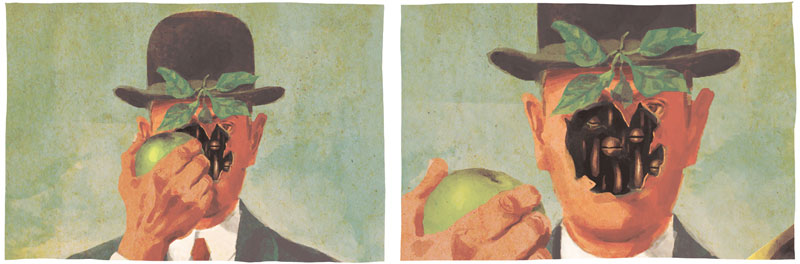
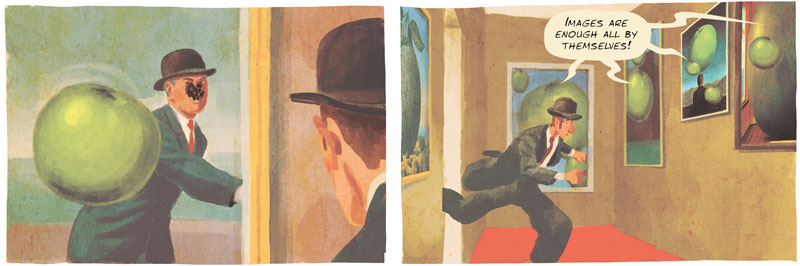
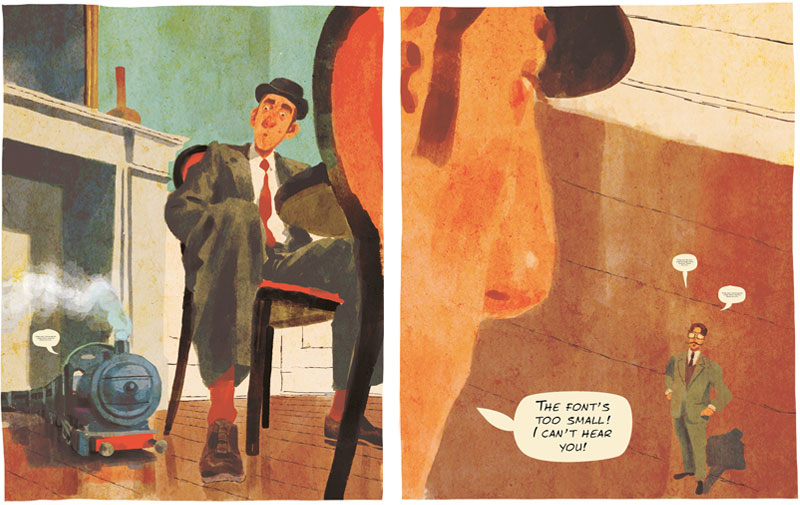
Our Art Masters series has already brought the lives of painters including Rembrandt and Van Gogh to graphic novel form. Now, courtesy of writer Vincent Zabus and artist Thomas Campi, it's the turn of the great Surrealist René Magritte.
The Surrealist's life story is told through the character of Charles Singulier, who one day makes the fanciful - and, as we'll learn, fateful - decision to buy a bowler hat. It soon becomes clear that this is no ordinary chapeau melon: this one once belonged to René Magritte, and by donning it Charles has unwittingly entered the artist’s unbridled, off-kilter world.
Charles is given a clear choice: uncover the secrets of Magritte’s life and work – or be doomed to wear the hat forever.
What follows is a remarkable exploration of Magritte’s imaginative landscape. Zabus and Campi examine the ideas and penetrate the mysteries of a paradoxical figure: a painter who didn’t like to paint; an instinctive anarchist who lived a suburban, petty bourgeois existence; a lonely, melancholy soul never far from his friends and collaborators.
Thought Bubble is upon us already – two months early! This weekend, 23rd and 24th September, we’ll be laying out our wares in the Millennium Square Marquee in Leeds Town Centre. You’ll find us at tables 221-223.
The festival that has for the last few years marked the finale of our autumn season has instead become its opening ceremony – and that means lots of hot-off-the-press books.
Leah Moore and John Reppion, whose Ghost Stories of an Antiquary, Vol. 1, debuted at last year’s festival, are back this year to launch the second volume: four stories about watchful guardians, architectural puzzles and ill-advised academic exploration, including the classic “Oh, Whistle, and I’ll Come to You, My Lad”, are brought to life with artwork from Al Davison, Abigail Larson, George Kambadais and Meghan Hetrick. Moore and Reppion will be signing on SelfMadeHero’s stand (tables 221-223 in the Millennium Square Marquee) throughout the weekend.
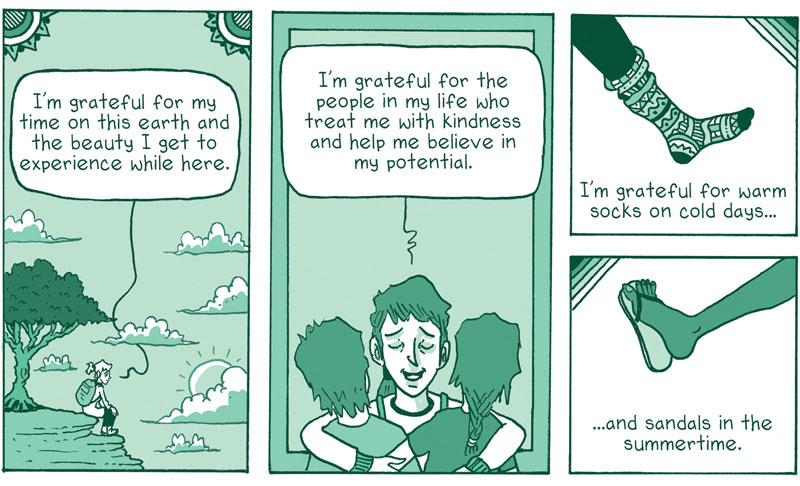
Ahead of its official release in October, Mike Medaglia‘s One Year Wiser: An Illustrated Guide to Mindfulness will be available for the first time at Thought Bubble. The latest book in his bestselling One Year Wiser series explores how mindfulness can be used to transform negative energy into feelings of love, compassion and positivity. Medaglia will be signing the book at table 47 in the Millennium Square Marquee.
What’s more, we’ll be giving away signed prints with every copy of Tillie Walden‘s graphic memoir Spinning, also out this month. Walden’s autobiographical graphic novel captures what it’s like to come of age, come out, and come to terms with leaving behind everything you used to know. Earlier this week she spoke to The Guardian about her life as a competitive ice skater, her work rituals and how her emotions affect her art.
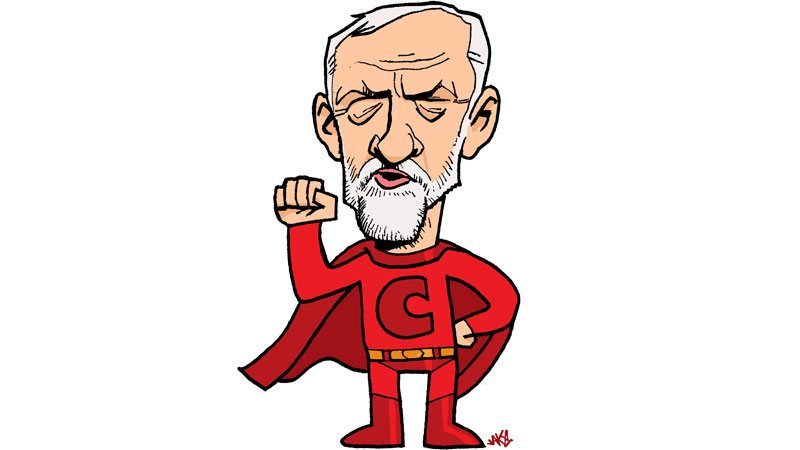
Oh, (and then there’s) Jeremy Corbyn! The Corbyn Comic Book, officially released on Monday, will also be available for the first time at Thought Bubble. This revolutionary anthology features comics on the subject of the Labour leader from Guardian cartoonists Steve Bell, Martin Rowson and Stephen Collins; graphic novelists Kate Evans, Karrie Fransman and Hannah Berry; and many more established and up-and-coming creators from across the globe. Comrades, this one is not to be missed.
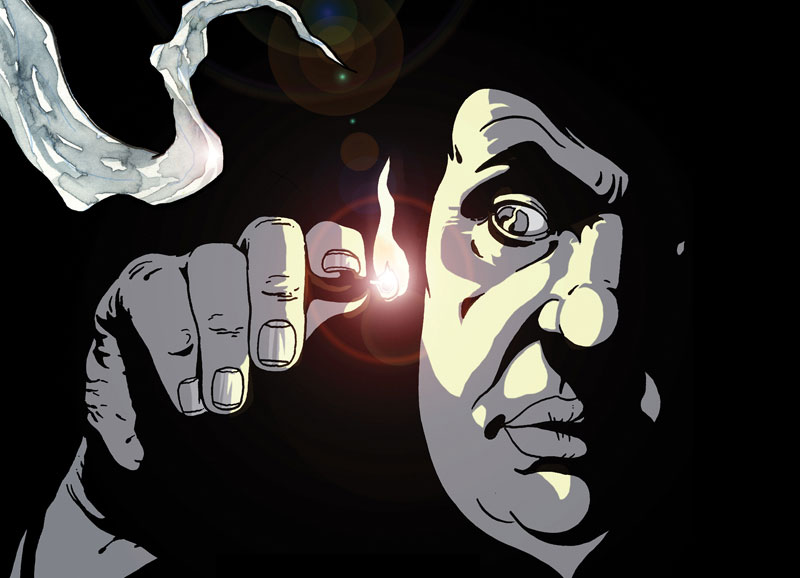
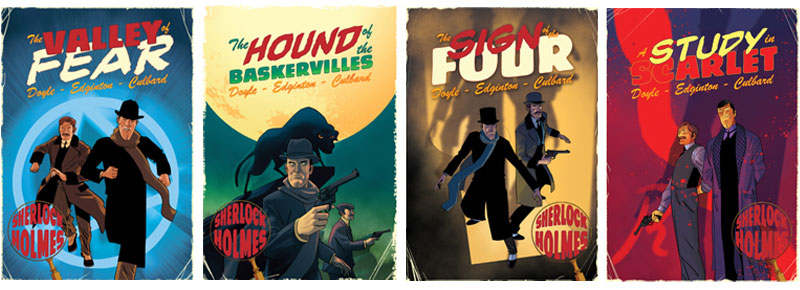
A panel event, “SelfMadeHero: A Decade of Comics”, takes place on Sunday at 10:30 in the Carriageworks Studio Theatre (Fifth Floor). To mark our tenth anniversary, I.N.J. Culbard, John Reppion, Ian Edginton and Leah Moore join SelfMadeHero’s Sam Humphrey to discuss the evolution of the company’s list, which has expanded from manga adaptations of Shakespeare to encompass everything from fiction to film criticism, sci-fi to biography. There could be no finer hangover cure.
Writers, artists, comrades: this autumn, SelfMadeHero will publish an anthology of comics about the Labour leader Jeremy Corbyn. But first, we need some comics – and for this we need you.
Here’s your summer challenge: make a comic on the subject of Jeremy Corbyn and submit it to SelfMadeHero by Wednesday 9th August 2017.
Successful entrants will have their comic published alongside work by Guardian cartoonists Steve Bell, Martin Rowson and Stephen Collins, and comics artists Karrie Fransman, Kate Evans and Steven Appleby, among others. They will also receive a share of royalties.
Here are the submissions guidelines:
The comic can be a minimum of one panel and a maximum of three pages long
It can be created in black-and-white or in colour
Page dimensions are 170mm x 240mm in size
Submissions are welcomed from published and unpublished creators of all nationalities
Submissions must be sent to [email protected] (using the subject heading “The Corbyn Comic Book”) no later than Wednesday 9th August 2017.
The anthology will be produced as a handsome, staple-bound comic book and launched at the Labour Party’s Annual Conference in September 2017.